Showing posts with label terrorism. Show all posts

Monday, July 18, 2016

Learning the Right Lessons from Nice

Public plaza in Paris
I was particularly distressed by last week’s attack on Nice’s Promenade des Anglais.  The sorrow was sharp because the attack occurred in a walkable urban place, a place described by CityLab as “an elegant Belle Époque version of the Atlantic City Boardwalk”, a place filled with folks in a celebratory mood. 

(Although as I write this it remains undetermined whether the attacker in Nice was affiliated with a terrorist organization, it seems moderately clear that he was a Muslim by birth and was likely using Muslim discontent as a justification for his actions, even if the specific motivation for the attack fell elsewhere.  These likely facts inform my comments below.)

Giving form to my thoughts on the attack provided an unexpected and uncomfortable reminder of recent history.

I recalled having written a post on a similar subject, but couldn’t remember which attack had triggered the post.  So I embarked on a search of my archives, trying to recall the target.  It wasn’t the concert hall or soccer stadium in Paris.  It wasn’t the Orlando night club.  It wasn’t the airports in either Istanbul or Brussels.  It wasn’t the classroom in Newtown or the conference room in San Bernardino.

I finally found it.  It was the Boston Marathon.  Those were far too many incidents of which to be reminded.

At least to my ear, my earlier article has stood up well.  I’d change a word or two, but not the underlying message.  However, there are further lessons that could have been gleaned from the crimes at the Boston Marathon and in Nice, lessons that I didn’t elucidate in the earlier post.  Those were omissions I’ll correct today.

One of the responses to the Nice attack, admittedly a lesser response but still heard, is that public places have become unsafe, that private homes, preferably far from the urban core, are the only truly secure places.

It’s a response that’s tone-deaf on at least two levels.

First, the oil needed to sustain the drivable suburban model, the model that created many of the remote private homes that some would now call our only refuges, has been a primary cause of Muslim unrest.  It’s true that the Israeli problem would have roiled the Middle East regardless and that the transition to modern democracy is never easy, but the perceptions that the West was only interested in the Middle East because of its oil and that many geopolitical decisions made by the West were driven by that interest were major destabilizing factors.

To suggest doubling down on the suburban model in response to tragic events triggered in part by the model is remarkably insensitive and unhelpful.

Second, one of the arguments used by extremists to radicalize moderates is that the Muslims will never be truly accepted into the Western world.

Assimilation is never easy.  We have many examples in the U.S. to prove that point.  But assimilation from behind the locked front doors of suburban fortresses is impossible.

To effectively combat the radical propaganda, we must rub shoulders on sidewalks, at restaurants, and in marketplaces with those who are different than us.

Taking a break from public places in the aftermath of Nice is understandable, but returning to those places after a short respite is essential if we’re to move past our era of fear.

I’ve never thought of visiting Nice, thinking myself more suited to wander the sidewalks of London, Paris, or Venice, but the events of last week may cause me to reconsider.  Hanging out on the Promenade des Anglais in Nice, exchanging smiles with strangers, suddenly seems a desirable way to spend an afternoon.

Hopefully, many of you feel the same.

On a personal note, I’ll be traveling for my next seven publishing days.  Given that my plate of urbanist activities has recently become well filled, I considered taking a break from writing.  But I couldn’t bring myself to break a skein of three posts per week that now goes back more than four-and-a-half years.  So, I’ve written, or will soon write, the posts that will cover my absence.  They’ll be published automatically as the regular publishing days arrive.

Most of the posts will be shorter than my regular posts, which is probably a good thing.  I’ve been advised that the desirable length for a blog post is 650 to 1,000 words, long enough to convey a clear message but short enough not to require a major time commitment from the reader.   However, I struggle with the upper end, often writing beyond the 1,000-word limit.  Recently, I’ve been saving up some ideas that can be addressed in fewer words and will use them during my travels, bringing my long-term average slightly closer to the desired range.

Lastly, I may struggle to serve those of you who are accustomed to being alerted to my new posts by Facebook, Twitter, LinkedIn, or email notices.  With a travel computer that is wheezing its way to obsolescence, uncertain hotel wifi, and a full schedule of activities, I may not be able to hit all of my noticing goals.  But I’ll do the best I can, while also encouraging you to visit my primary site each Monday, Wednesday, and Friday even if no notices are received.

(And if you’d like to begin receiving email notices of new blog posts, please send me an email, although you may not get the full value of the request until after I return.)

In my next post, which will publish as I’m winging my way to my comfortably walkable paternal hometown in Ohio, I’ll ponder our failure to turn more quickly toward urbanism despite many signs that we should be doing so.

As always, your questions or comments will be appreciated.  Please comment below or email me.  And thanks for reading. - Dave Alden (davealden53@comcast.net)

Friday, November 20, 2015

Thinking about Paris

This will be relatively brief post.  In part because I need to practice brevity.  And in part because I’ve chosen a topic on which I could get into trouble if I ramble overly long.

I’ve only seen Paris once.  My wife had a life-long dream of visiting the City of Lights.  So, for our fifth anniversary, we broke away from a bargain vacation in London, took the Chunnel, and spent three days in a fine hotel in the heart of Paris, across from the Tuileries and not far from the Louvre.

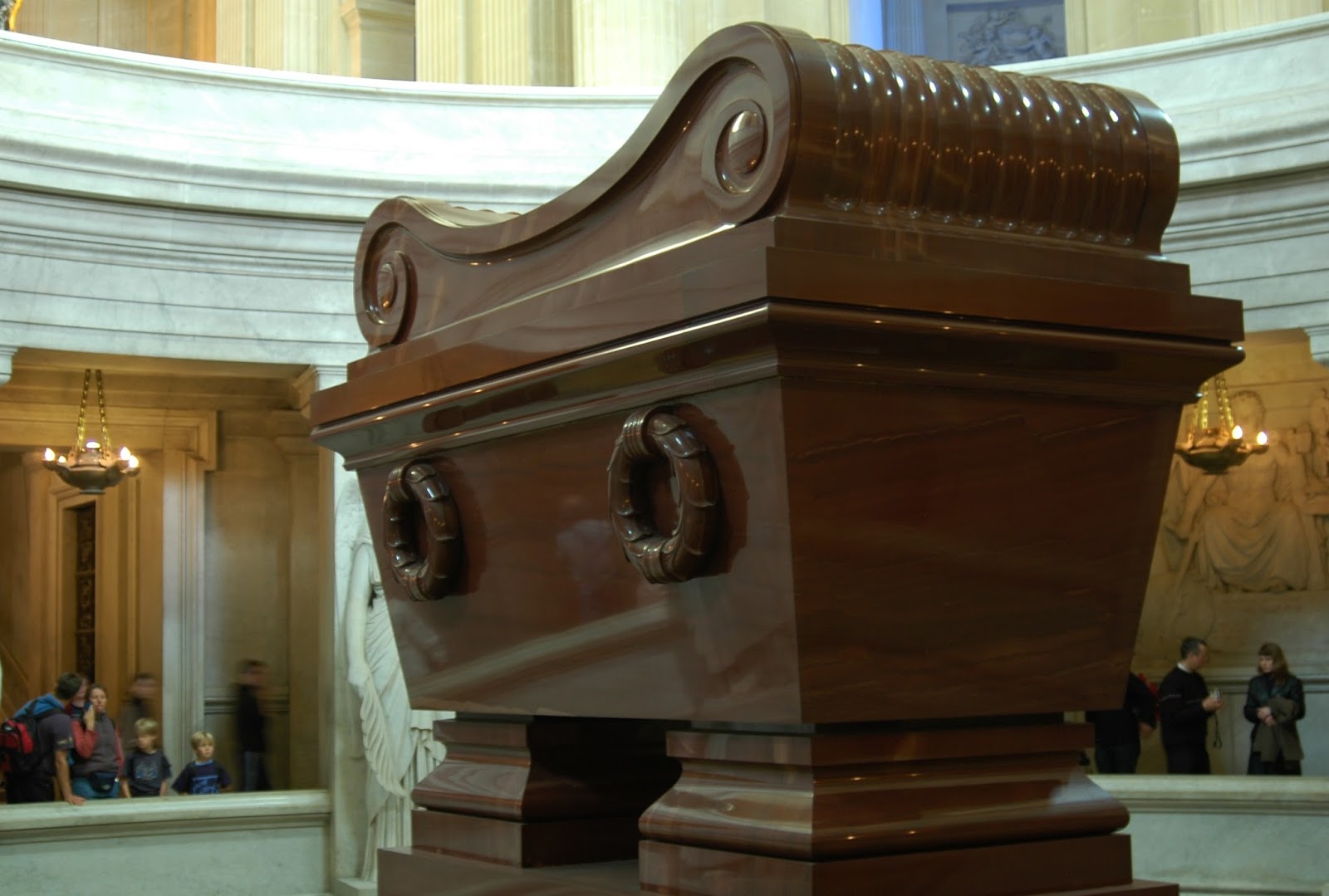
They were a fine three days.  Having different interests, my wife and I spent much of our time in different pursuits.  I visited the Rodin Museum and the sarcophagus of Napoleon while she wandered shops, in particular the Parisian perfumeries.

But we met up under the Eiffel Tower at the exact time of our wedding five years earlier (ignoring the time zone difference), took a cab to the Arc de Triomphe, and ambled down the Champs-Elysees, stopping for beverages at a sidewalk café.  It was a great way to commemorate an anniversary.  And then we returned to our rented flat in London.

It’s likely that we’ll never again visit Paris, but those three days remain bright in our memories.  Bright enough that the recent terrorist attacks had a particularly sharp impact on us.

One can look at the Parisian attacks from several different urbanist perspectives.

The first is distress that people enjoying the fruits of urban life in one of the great cities of the world can have their lives ended or irremediably changed in a matter of minutes.

I fear that many will respond to the events in Paris by withdrawing into their suburban castles and lifting the drawbridges.  But that would be the wrong response.  Cities are our source of commerce, culture, and education.  Our civilization would regress without them.  When cities hit bumps, our job is to fix the bumps, not to turn our backs.

As Richard Florida notes in CityLab, there is strong correlation between the absence of vibrant cities and the instability of nations from which terror can flow.  Florida is careful to note that correlation isn’t causation, but it seems likely that strengthening the cities of unstable countries would simultaneously brace up the troubled nations and weaken the roots of terrorism.

Next is discomfort that the source of these particular attacks was the urban neighborhood of Molenbeek-St. Jean in Brussels.  Also in CityLab, Feargus O’Sullivan writes about what has gone wrong in the neighborhood, which is modestly attractive but permeated by despair.  Something has gone wrong in a culture when jobseekers in Molenbeek must use non-Molenbeek addresses when submitting resumes.

The roots of Molenbeek as described by O’Sullivan may be unique to Brussels, but similar pockets of despair and hopelessness are found in many cities.  However, they needn’t be.  Tools like inclusionary housing, walkable settings, and strong transit can make a difference.  We know how to implement those actions.  It’s up to us to make the necessary commitments.

Last is hope that comes from big city mayors, unlike many governors, continuing to welcome refugees, many of whom are fleeing violence even worse than seen in Paris.  Again in CityLab, Kriston Capps writes of the mayors who understand the renewed vitality that immigrants can bring to communities, while also sympathizing with the plights that forced them to become refugees.

Security measures on immigration remain appropriate, but warm welcomes should be waiting beyond the security checkpoints.  Mayors get that, which should make us optimistic about the future of cities.

The political and social conditions that underlay the Paris terrorism can’t be solved solely with urban solutions, but good urbanism can play a role.  A big role.

In my next post, I’ll look at the coming retail extravaganza that is the Christmas season and what it tells us about the flaws of suburban parking.  For many, the meaning of Black Friday have moved from the 1929 stock market crash to the post-Thanksgiving shopping crush and onward to an ominous message about our times.

As always, your questions or comments will be appreciated.  Please comment below or email me.  And thanks for reading. - Dave Alden (davealden53@comcast.net)

Wednesday, April 17, 2013

Urbanism and Terrorism

In the aftermath of the Boston Marathon bombing earlier this week, many are staying away from public places.  I understand their fear.  Anthony Flint of Atlantic Cities writes about how the pride that Bostonians felt on Patriots Day was turned upside down, casting a pall that won’t soon dissipate.

But if we continue to stay away from public places, we’ve missed the point.  (Let’s retire the over-used phrase “the terrorists have won.”)  Even though urbanism may offer convenient targets for terrorists, it also creates conditions in which terrorism struggles to survive.

At this writing, we don’t know what forces were behind the bombings.  But most of us we can tick off a list of likely suspects, some foreign and some domestic.  And without fail, those forces of evil have roots in secrecy and isolation.

Public squares and plazas aren’t immune from political thinking, but it’s in those places that movements are begun to improve freedom and the lot of the common man.  Think of the Arab Spring or Tiananmen Square.  It’s in dark alleys, along shadowy halls of totalitarianism, or behind impenetrable national walls of censorship that the good instincts of the public place are subverted into terrorism.

So if you must, stay out of public places for the next few days.  A recovery time is understandable.  But then please return with full hearts to the sidewalks, the parks, and the squares.  And may your joyful greetings to friends serve as messages to terrorists that their schemes will eventually come to naught.  And while you’re chatting with your friends, you might want to promote the development of more urbanist places.

This isn’t meant to imply that urbanism is the sole weapon needed to push back against terrorism.  Much like wider sidewalks aren’t sufficient to sustain urbanism, but is only one tool among many, urbanism isn’t the sole tool needed to fight terrorism.  But it’s in the toolbox and can be surprisingly effective.

Just because we choose to stay in public places doesn’t mean we need to be stupid about the risks.  Amanda Erickson of Atlantic Cities writes about the evolving thinking on trash cans and how new design approaches can reduce of the risks of explosives placed in trash receptacles.

Lastly, technology is increasing the difficulty of getting away with an urban attack.  Emily Badger of Atlantic Cities writes that the Boston police are looking for photos and videos from the people clustered near the finish line, speculating that the perpetrators were likely caught amidst the many images being collected.

As always, your questions or comments will be appreciated.  Please comment below or email me.  And thanks for reading. - Dave Alden (davealden53@comcast.net)